
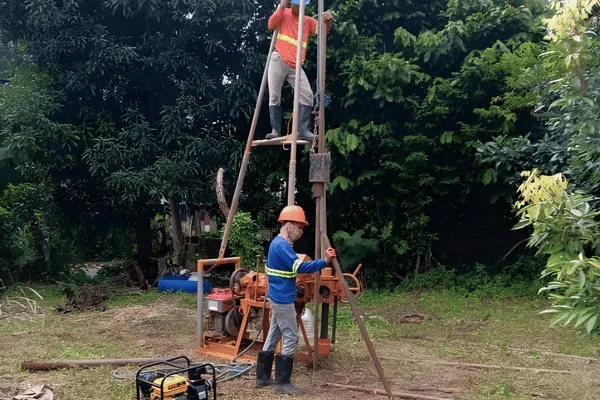
Every structure depends on the ground beneath it. Soil conditions control how a building behaves once loads are applied, especially for projects exposed to seismic activity and changing environmental conditions. The Standard Penetration Test plays a central role when engineers assess whether a site can safely support planned structures.
Soil that appears stable at the surface may contain weak layers below. These hidden conditions often lead to settlement, tilting, or uneven structural performance once construction begins. A Standard Penetration Test provides measurable field data that helps engineers understand how soil behaves under stress.
Geotechnical Soil Investigation programs depend heavily on the Standard Penetration Test because it delivers direct information about subsurface strength. This information becomes the basis for safe foundation design, helping prevent costly structural problems during and after construction.
What Is the Standard Penetration Test (SPT)?
The Standard Penetration Test is a field testing method used to evaluate soil strength and consistency at different depths. This test forms part of a geotechnical soil investigation program and helps determine how soil layers respond to impact and loading.
The Standard Penetration Test measures soil resistance by recording the number of hammer blows required to drive a split-spoon sampler into the ground. These recorded values, known as N-values, serve as indicators of soil density and stiffness.
Engineers rely on the Standard Penetration Test because it provides direct field measurements that support design decisions for foundations. It helps classify soil types, identify weak zones, and estimate the ability of soil layers to support structural loads.
Unlike surface observations, the Standard Penetration Test reaches deeper layers, giving engineers a clearer understanding of what lies beneath the construction site.
How the Standard Penetration Test Works
The Standard Penetration Test follows a structured field procedure carried out during drilling operations. A borehole is first created at the site to reach the required testing depth. Once the target depth is reached, the test begins.
A split-spoon sampler is lowered into the borehole and driven into the soil using a standardized hammer system. The number of hammer blows required for the sampler to penetrate specific depth intervals is carefully recorded.
The Standard Penetration Test usually divides penetration into segments, and engineers record the blow counts for each segment. The final N-value is calculated based on the resistance encountered during penetration.
These results from the Standard Penetration Test provide a numerical representation of soil strength. Higher values often indicate denser or stronger soil, while lower values may suggest softer or weaker layers.
After completing the Standard Penetration Test at different depths, soil samples are retrieved for additional laboratory testing. This combination of field and laboratory data strengthens the accuracy of geotechnical analysis.
Importance of Standard Penetration Test Results in Foundation Design
Foundation design depends heavily on accurate soil data. The Standard Penetration Test provides key information that engineers use to determine the most suitable foundation type for a project.
Results from the Standard Penetration Test help estimate bearing capacity, which refers to the ability of soil to support structural loads. Without this data, foundation systems may be overdesigned or underdesigned, both of which can lead to cost inefficiencies or structural risks.
The Standard Penetration Test also identifies weak or inconsistent soil layers. These layers may require deeper foundations such as piles, or soil improvement methods before construction proceeds.
For structures exposed to uneven loading conditions, the Standard Penetration Test helps engineers evaluate potential settlement behavior. This reduces the risk of differential movement that can affect structural alignment.
Reliable foundation design depends on repeated Standard Penetration Test readings across different site locations, especially for large-scale projects.
Applications of Standard Penetration Test in Philippine Construction Projects
The Standard Penetration Test is widely applied across various construction sectors in the Philippines due to variable soil conditions and seismic exposure.
Residential developments rely on the Standard Penetration Test to confirm that housing foundations can safely support loads over time. Even small structures benefit from accurate soil profiling.
Commercial buildings such as malls, offices, and warehouses use Standard Penetration Test results to design foundations that match load demands and site conditions.
Infrastructure projects such as bridges, highways, and ports depend heavily on the Standard Penetration Test because these structures require long-term stability under heavy and dynamic loads.
High-rise developments particularly rely on the Standard Penetration Test since deeper soil layers must be evaluated to ensure structural safety and performance.
Compliance with local building regulations often requires Standard Penetration Test data as part of the approval process for construction permits and safety documentation.
Role of Standard Penetration Test in Geotechnical Soil Investigation
The Standard Penetration Test forms a core component of geotechnical soil investigation programs. It works alongside laboratory testing to create a complete understanding of subsurface conditions.
Field results from the Standard Penetration Test are correlated with laboratory data such as soil classification, moisture content, and shear strength. This combination provides a detailed soil profile for engineers.
A geotechnical soil investigation uses Standard Penetration Test results to map soil variability across a site. This helps identify zones that require special foundation considerations.
The Standard Penetration Test also supports soil stratification analysis, which shows how soil layers are arranged beneath the surface. This information is critical for selecting foundation depth and type.
Without the Standard Penetration Test, geotechnical reports may lack reliable field-based strength measurements, reducing accuracy in engineering design.
Standards and Compliance in Standard Penetration Test
The Standard Penetration Test follows internationally recognized procedures such as ASTM and AASHTO standards. These standards ensure consistency and reliability across testing programs.
Local construction requirements also recognize Standard Penetration Test data, especially those aligned with DPWH-BRS guidelines. Compliance with these standards supports approval processes for building permits and infrastructure projects.
Accurate execution of the Standard Penetration Test requires calibrated equipment, trained personnel, and strict adherence to testing procedures. Variations in method can affect results and lead to incorrect design assumptions.
Standardized execution of the Standard Penetration Test ensures that results remain consistent regardless of project location or scale.
Why Professional Soil Testing Services Matter
Reliable Standard Penetration Test results depend on proper execution by qualified personnel using calibrated equipment. Errors during field testing can lead to inaccurate interpretations of soil strength.
Professional geotechnical teams ensure that the Standard Penetration Test is performed at correct depths and under controlled conditions. This improves data reliability for engineering analysis.
Accurate Standard Penetration Test results reduce construction risks by providing clear information for foundation design. Poor-quality testing may lead to structural issues that become costly to correct later.
Combining field testing such as the Standard Penetration Test with laboratory analysis strengthens overall geotechnical assessment and supports better decision-making for construction projects.
Field and Laboratory Testing Support
Field testing provides real-time data during site investigation. The Standard Penetration Test is a key part of this process, offering direct measurements of soil resistance at various depths.
Field results from the Standard Penetration Test are complemented by laboratory testing of soil samples. Laboratory analysis confirms physical and mechanical properties that support engineering calculations.
Together, field testing and laboratory testing create a complete geotechnical profile. The Standard Penetration Test plays a central role in linking both data sources.
This combined approach supports accurate foundation design and helps ensure structural safety across different types of construction projects.
Building on Reliable Ground Data
Safe construction depends on understanding what lies beneath the surface. The Standard Penetration Test provides essential field data that supports foundation design, soil evaluation, and structural planning.
Accurate results from the Standard Penetration Test reduce uncertainty in construction projects and help engineers design foundations that match real ground conditions.
Geotechnical Soil Investigation programs that include the Standard Penetration Test provide stronger assurance of long-term structural performance, especially in areas with variable soil conditions.
Reliable soil data from the Standard Penetration Test supports safer, more efficient, and more informed construction decisions across residential, commercial, and infrastructure projects.
Frequently Asked Questions (FAQ)
What is the Standard Penetration Test used for?
The Standard Penetration Test is used to evaluate soil strength and density at different depths. It helps engineers determine suitable foundation designs for construction projects.
Why is the Standard Penetration Test important in construction?
The Standard Penetration Test provides field data that supports safe foundation design. It reduces risks linked to settlement, weak soil layers, and structural instability.
What do N-values in the Standard Penetration Test mean?
N-values represent the number of hammer blows required to drive a sampler into the soil. These values indicate soil resistance and help classify soil strength.
Is the Standard Penetration Test required for building permits?
Many construction projects require Standard Penetration Test data as part of geotechnical reports submitted for permits and approvals, depending on local regulations.
How deep does the Standard Penetration Test go?
The depth of the Standard Penetration Test depends on project requirements and soil conditions. It is performed at multiple depths to evaluate different soil layers.
Who performs the Standard Penetration Test?
The Standard Penetration Test is conducted by trained geotechnical engineers or technicians using calibrated equipment as part of a soil investigation program.