Construction, maintenance, and access work require serious safety planning before any worker leaves ground level. A single ladder climb, tower access route, rooftop entry point, or facade task can expose workers to fall risks that demand the right equipment, proper setup, and dependable support systems. That is why a Vertical Lifeline in Australia plays a critical role across worksites where crews move upward or downward during daily operations.
A Vertical Lifeline in Australia gives workers a controlled safety connection while climbing or descending. It supports safer movement across fixed ladders, roof access points, towers, tanks, silos, shafts, and other vertical structures. For builders, contractors, facility managers, and maintenance teams, this type of fall arrest setup can help reduce risk during routine and high-risk tasks.
Groxx Gears provides heavy-duty safety and access solutions for demanding construction and maintenance settings across Australia. The company focuses on high-performance gear, precision-made components, fall protection systems, building maintenance systems, horizontal lifelines, vertical lifelines, rigging gear, fasteners, and suspended access solutions. When a crew depends on equipment to protect workers at height, quality should never be treated as an afterthought.
What Is a Vertical Lifeline in Australia?
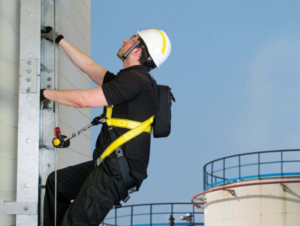
A Vertical Lifeline in Australia is a fall protection system created for workers who need to move along a vertical path. It may be used on ladders, towers, masts, silos, tanks, roof access routes, and structural access points. The system usually works with a full body harness, guided fall arrest device, rope grab, cable sleeve, connectors, and a secure anchor point.
The main purpose of a Vertical Lifeline in Australia is to keep the worker connected as they climb. Should a fall occur, the system helps arrest the fall and reduce the chance of severe injury when properly selected, fitted, checked, and used by trained personnel.
A vertical lifeline does not replace site risk assessment, training, supervision, or safe work procedures. Rather, it forms one part of a wider height safety plan. The right system must suit the structure, task, worker movement path, site conditions, and the type of access required.
Groxx Gears understands that no two structures are exactly alike. That is why fall protection systems should be chosen based on real site needs, not generic assumptions. A Vertical Lifeline in Australia should support the way workers actually move, climb, inspect, repair, clean, and maintain structures.
Why a Vertical Lifeline in Australia Matters for Worksite Safety
Falls from height remain one of the most serious risks on construction, maintenance, and industrial worksites. Workers often climb ladders, reach roof zones, access machinery, service tall structures, or inspect external building areas. Each step can carry risk when the right safety system is missing or poorly matched to the job.
A Vertical Lifeline in Australia helps provide continuous connection during vertical travel. Without this support, workers may be exposed during the climb, especially on fixed ladders or elevated access routes where handholds alone are not enough.
For site managers, the value of a Vertical Lifeline in Australia goes beyond equipment purchase. It supports safer work planning, better movement control, and stronger worker confidence. Crews can focus on the task when their safety gear is designed for the demands of the site.
Groxx Gears builds its brand around one clear principle: high-risk environments leave no room for error. Whether a crew is securing a bolt, anchoring a worker, or preparing a maintenance route, equipment must be dependable, durable, and suited to harsh working conditions.
Common Uses of Vertical Lifeline in Australia
A Vertical Lifeline in Australia can support many access needs across construction, maintenance, utilities, and facility operations. It is especially useful where workers must climb fixed routes or reach elevated structures.
Common uses include ladder access on commercial and industrial buildings, roof entry routes for maintenance teams, communication towers, utility structures, tanks, silos, facade access zones, construction access points, plant equipment, and structural inspection areas.
For high-rise buildings, a Vertical Lifeline in Australia may support workers who need safe access to roof plant areas, maintenance ladders, service platforms, or external structural zones. For industrial sites, it can help workers reach tanks, processing structures, loading areas, machinery, and other elevated points.
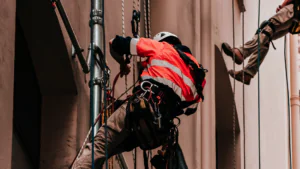
Groxx Gears also supports building maintenance system requirements, including suspended access for facade cleaning, glass replacement, and structural checks. When combined with proper fall protection planning, vertical lifelines can form part of a safer access setup for ongoing maintenance work.
Key Parts of a Vertical Lifeline in Australia
A Vertical Lifeline in Australia is made up of several parts that work together. Each component has a specific role, and every part must be compatible with the wider system.
The anchor point is one of the most important parts. It provides the secure connection point for the lifeline system. Anchor strength, placement, structure type, and installation quality all matter.
The lifeline itself may be made from rope or cable, depending on the access route and site conditions. It gives the worker a guided connection path while moving vertically.
A guided fall arrest device or rope grab travels along the lifeline with the worker. During normal movement, it allows climbing or descent. During a fall, it locks or arrests movement to help stop the fall.
A full body harness connects the worker to the system. Harness fit, condition, and correct use are essential. Connectors, shock-absorbing elements, brackets, tensioning hardware, end stops, labels, and inspection tags may also be part of the complete setup.
Groxx Gears focuses on safety hardware that can meet the demands of heavy-duty sites. A Vertical Lifeline in Australia should not be selected as an isolated product. It should be reviewed as a complete system where every component supports worker safety.
How Groxx Gears Supports Vertical Lifeline in Australia
Groxx Gears provides heavy-duty industrial solutions for construction and maintenance sectors across Australia. The company supplies safety gear and access solutions built for harsh environments, high-risk tasks, and demanding jobsite conditions.
A Vertical Lifeline in Australia from a safety-focused provider should offer more than a basic product. It should support practical site movement, worker protection, and long-term durability. Groxx Gears brings together fall protection systems, horizontal and vertical lifelines, rigging gear, fasteners, building maintenance systems, and suspended access solutions for crews working across complex structures.
The company’s approach is rooted around high-performance engineering. Groxx Gears gives attention to strength, durability, and dependable operation. Its product focus includes high-strength alloys, advanced heat treatment, CNC grinding and hobbing, AGMA quality levels, tight tolerances, reduced vibration, and efficient machinery performance.
While these strengths are often discussed through gears, fasteners, and mechanical components, the same safety-first mindset supports its fall protection range. A Vertical Lifeline in Australia must help protect lives, so equipment quality, system design, and suitability should always come first.
Vertical Lifeline in Australia for Construction Sites
Construction sites change constantly. Access paths shift as structures rise, work zones move, and crews handle different tasks at different heights. Workers may climb ladders, access temporary platforms, reach upper levels, or move along structural areas before permanent safety systems are complete.
A Vertical Lifeline in Australia can support safer access during these vertical movements. It helps workers stay connected when climbing fixed access routes, reaching elevated work points, or carrying out tasks where fall exposure exists.
For construction teams, this type of system can support better task planning. Site managers can review worker movement routes, match equipment to each access point, and reduce unsafe shortcuts. Contractors can also strengthen their height safety approach by selecting equipment suited to frequent use and tough site conditions.
Groxx Gears provides safety hardware for high-stakes work environments. Its products are built for crews that cannot afford weak performance or unreliable equipment. A Vertical Lifeline in Australia is especially important on sites where height access forms part of daily operations.
Vertical Lifeline in Australia for Building Maintenance
Building maintenance often involves roof zones, ladders, facade areas, plant rooms, windows, external structures, and service points above ground level. Maintenance crews may need to inspect, repair, clean, or replace parts while moving through elevated access routes.
A Vertical Lifeline in Australia can help workers move safely along vertical paths during these tasks. It is especially useful for fixed ladders leading to rooftop plant, facade access points, service platforms, and other maintenance areas.
Groxx Gears supports building maintenance system needs by offering access solutions for modern structures. Suspended access systems can help with facade cleaning, glass replacement, and structural inspections. When a vertical lifeline is planned with a wider building maintenance setup, it can help create a safer access pathway for workers who regularly service the building.
Facility managers, property owners, and maintenance contractors should view a Vertical Lifeline in Australia as part of long-term building safety. A properly chosen system can support recurring work and help crews carry out tasks with greater confidence.
Vertical Lifeline in Australia vs Horizontal Lifeline
A Vertical Lifeline in Australia supports upward and downward movement. A horizontal lifeline supports side-to-side movement across a work area, such as a roof, platform, edge zone, or long access route.
Many sites need both. A worker may climb using a vertical lifeline, then move across a roof or platform using a horizontal lifeline. Each system serves a different movement pattern, and both must be planned around the actual worksite layout.
Groxx Gears provides horizontal and vertical lifeline solutions for crews working at height. This matters because fall protection should not be chosen with a one-size approach. A roof area, ladder shaft, tower, facade, and platform can each require a different safety setup.
A Vertical Lifeline in Australia is most useful when the worker’s movement is mainly up or down. A horizontal lifeline is best suited for lateral movement. Choosing between them depends on task type, structure, fall hazard, and access route.
What to Consider Before Choosing a Vertical Lifeline in Australia
Choosing a Vertical Lifeline in Australia should start with the site, not the product catalogue. The right system depends on the structure, the task, the number of workers, the climb path, and the work environment.
Key factors include access height, anchor location, structure strength, worker movement route, weather exposure, corrosion risk, frequency of use, rescue planning, and system compatibility. A lifeline used on an outdoor coastal structure may face different conditions than one used inside a plant room. A system used daily may require different planning than one used for occasional inspection access.
Ease of inspection also matters. Workers and safety managers need to identify wear, damage, corrosion, loose hardware, or missing labels. Clear tagging and documentation support safer ongoing use.
Price should not be the only deciding factor. A Vertical Lifeline in Australia protects workers during some of the most dangerous jobsite tasks. Poor-quality equipment, mismatched parts, or weak planning can create serious risk. Groxx Gears focuses on durable, high-performance solutions for teams that need reliable safety hardware.
Why Engineering Quality Matters for Vertical Lifeline in Australia
A Vertical Lifeline in Australia must perform under pressure. It may face heat, rain, dust, vibration, heavy use, outdoor exposure, and demanding work schedules. Every part of the system should support safe function when workers need it most.
Groxx Gears places strong value on engineering quality. The company focuses on high-strength materials, advanced heat-treatment methods, precision manufacturing, CNC grinding, hobbing, tight tolerances, and smooth mechanical performance. This engineering-driven mindset reflects the type of dependability required for construction and maintenance environments.
For fall protection, quality matters because the equipment has a life safety purpose. A vertical lifeline is not just a site accessory. It is part of the system that protects workers while climbing or descending.
A high-quality Vertical Lifeline in Australia should support controlled movement, dependable fall arrest performance, compatibility with other safety gear, and ongoing inspection. Groxx Gears supports this need through products created for serious work conditions and safety-focused teams.
Inspection and Care for Vertical Lifeline in Australia
A Vertical Lifeline in Australia should be checked regularly as part of a height safety program. Every system should be reviewed before use, after heavy exposure, after possible damage, and after any fall event.
Common checks include looking for frayed rope, damaged cable, corrosion, loose brackets, worn connectors, bent hardware, missing labels, broken stitching on harnesses, and signs of impact. Workers should also check that the guided fall arrest device moves correctly and locks as required.
After any fall event, the system should be removed from service until assessed by a competent person. This helps prevent damaged equipment from being reused.
Scheduled maintenance and documentation also support safer long-term use. Site owners and safety managers should keep records for inspections, repairs, replacement dates, and any system concerns. A Vertical Lifeline in Australia should always be treated as a life safety system, not just another worksite tool.
Vertical Lifeline in Australia and Worker Confidence
Workers perform better when they trust their equipment. A Vertical Lifeline in Australia supports safer movement, but it also gives crews more confidence when completing tasks at height.
Confidence does not mean taking shortcuts. It means workers can climb, descend, inspect, clean, repair, and maintain with a proper safety connection. This can reduce hesitation, improve task flow, and support a stronger safety culture across the site.
Groxx Gears understands that crews working at height need gear they can depend on. Its focus on heavy-duty performance, precise manufacturing, and worksite-ready equipment supports teams that face serious conditions every day.
A Vertical Lifeline in Australia can also help businesses show commitment to worker protection. When paired with training, risk assessment, supervision, rescue planning, and regular inspection, it becomes part of a practical safety system for high-risk work.
Why Choose Groxx Gears for Vertical Lifeline in Australia?
Groxx Gears is a strong choice for businesses looking for a Vertical Lifeline in Australia because the company understands heavy-duty work environments. Its products and systems are made for construction, maintenance, industrial access, and height safety needs.
The brand supports multiple safety and access categories, including fall protection systems, horizontal lifelines, vertical lifelines, rigging gear, fasteners, suspended access, and building maintenance systems. This gives customers access to related solutions from a provider focused on serious worksite demands.
Groxx Gears also places importance on engineering quality. Its use of high-strength materials, advanced production processes, tight tolerances, and durable product design supports long-term performance across tough environments.
For contractors, builders, facility managers, and maintenance teams, a Vertical Lifeline in Australia from Groxx Gears can support safer vertical access and stronger fall protection planning. When worker safety is at stake, choosing dependable gear is a business-critical decision.
Speak With Groxx Gears About Vertical Lifeline in Australia
A Vertical Lifeline in Australia can make a major difference for crews that climb, inspect, maintain, clean, repair, or build at height. It supports safer access across ladders, rooftops, towers, tanks, silos, industrial structures, and building maintenance routes.
Groxx Gears provides heavy-duty safety and access solutions for businesses across Australia. From vertical lifelines and horizontal lifelines to suspended access and building maintenance systems, the company supports teams that need reliable equipment for demanding work environments.
Businesses looking for a Vertical Lifeline in Australia can work with Groxx Gears to review site needs, worker access routes, fall protection goals, and equipment requirements. The right system can help protect crews, support safer work practices, and strengthen confidence during high-risk tasks.
FAQ About Vertical Lifeline in Australia
What is a Vertical Lifeline in Australia?
A Vertical Lifeline in Australia is a fall protection system used to help workers stay connected while moving up or down a vertical access route. It is commonly used on ladders, towers, tanks, silos, roof access points, and maintenance structures.
Where is a Vertical Lifeline in Australia commonly used?
A Vertical Lifeline in Australia is often used on construction sites, industrial facilities, high-rise buildings, communication towers, fixed ladders, rooftop access routes, and building maintenance areas.
Why is a Vertical Lifeline in Australia important?
A Vertical Lifeline in Australia is important because it supports safer climbing and descent during height-related work. It helps workers stay connected to a fall arrest system while moving along vertical access points.
Is a vertical lifeline different from a horizontal lifeline?
Yes. A Vertical Lifeline in Australia supports up-and-down movement, while a horizontal lifeline supports side-to-side movement across roofs, platforms, or long work zones. Some sites may require both systems.
Who needs a Vertical Lifeline in Australia?
Construction crews, roof workers, maintenance teams, facade access teams, utility workers, plant workers, and facility managers may need a Vertical Lifeline in Australia when work requires vertical access at height.
Can Groxx Gears support building maintenance safety?
Yes. Groxx Gears provides building maintenance systems, suspended access solutions, fall protection systems, horizontal lifelines, and vertical lifelines for demanding worksite and maintenance applications.
Why choose Groxx Gears for Vertical Lifeline in Australia?
Groxx Gears focuses on heavy-duty safety and access equipment for construction and maintenance sectors. The company supports high-performance gear, durable materials, fall protection systems, and dependable access solutions for crews working at height.
How often should a Vertical Lifeline in Australia be checked?
A Vertical Lifeline in Australia should be checked before use and reviewed regularly based on site requirements, frequency of use, exposure, and manufacturer guidance. It should also be assessed after damage, heavy wear, or any fall event.
Can a Vertical Lifeline in Australia be used with any harness?
A Vertical Lifeline in Australia should only be used with compatible equipment. Harnesses, connectors, rope grabs, cable sleeves, anchors, and other parts should be matched properly to the system and checked by trained personnel.
How can businesses choose the right Vertical Lifeline in Australia?
Businesses should review the access height, structure type, worker movement path, environmental exposure, anchor points, rescue plan, and inspection needs. Groxx Gears can support teams looking for dependable vertical lifeline and fall protection solutions for demanding worksites.